
What to Expect From a Coworking Space in Bali
If you’re planning to spend some time working from the island, understanding what to expect from a coworking space in Bali will save you a lot of guessing. Remote workers, digital nomads, freelancers, and small teams come here for a better work–life balance, and they rely on these spaces to stay productive. Instead of treating it like just another café, it helps to know how a good coworking setup actually works.
A coworking space in Bali can be found in popular areas like Canggu, Ubud, Seminyak, Kuta, and Denpasar. Each neighborhood has its own pace and lifestyle, but most serious spaces share a few core characteristics. Once you know what those are, it becomes much easier to choose a place that fits the way you work.
Core Facilities You Should Expect
A professional coworking space in Bali is built for real work, not only for aesthetics. At a minimum, you should expect reliable Wi‑Fi, comfortable seating, and a layout that supports both focus and collaboration.
1. Reliable Wi‑Fi and Stable Power
Good Wi‑Fi is non‑negotiable. Most modern spaces use high‑speed connections and sometimes even backup lines to keep things stable. This matters if your day includes video calls, cloud tools, or large file transfers. You should also see plenty of power outlets spread throughout the room so you’re not fighting for the only available socket.
2. Dedicated Areas for Different Types of Work
Many spaces are divided into different zones, for example:
- Open hot‑desk areas for flexible seating
- Fixed desks for members who want the same spot every day
- Small rooms or phone booths for private calls
- Meeting rooms for client calls or team sessions
This kind of layout helps keep the work environment organized. You can move from quiet solo work to conversations or calls without disturbing everyone around you.
3. Meeting Rooms and Call Spaces
If your schedule includes regular client meetings or team stand‑ups, you’ll want access to proper meeting rooms. A good coworking space in Bali usually offers bookable rooms with monitors, whiteboards, and decent sound. Many also provide small call booths so you can handle quick calls without taking up an entire meeting room.
Comfort, Design, and Everyday Convenience
Facilities are important, but comfort is what lets you stay productive for full workdays. Bali’s better coworking spaces pay attention to how the space feels when you’re there for hours, not just how it looks in photos.
1. Ergonomic Seating and Practical Design
Look for ergonomic chairs and desks with enough space for a laptop, mouse, and notebook. Proper seating makes a big difference if you’re on a long remote work stretch. Good lighting, natural airflow, and a sensible room temperature also contribute to a healthy work environment.
2. Access to Food, Coffee, and Break Areas
Most coworking spaces in Bali sit close to cafés and restaurants, and some have their own in‑house kitchen or coffee bar. This makes it easy to grab lunch or a snack without losing momentum in the middle of your day. A small lounge or outdoor area is also helpful when you need a short mental break.
3. Extra Perks: Coliving, Gym, and Pool
Some places go beyond basic coworking and offer coliving rooms, a small gym, or even access to a pool. These extras are not essential, but they can simplify your routine if you prefer to live and work in the same complex. For longer stays, this kind of setup reduces the time you spend commuting between accommodation and the office.
Community and Networking
One of the biggest reasons to choose a coworking space in Bali instead of working alone is the community. The island attracts professionals from different fields and countries, so you’ll often find a mix of skills in one room.
1. Events and Informal Meetups
Many spaces organize regular events such as:
- Skill‑sharing workshops
- Talks on marketing, tech, remote work, or business
- Casual networking evenings or community dinners
These are useful if you’d like to learn something new or meet people who understand remote work life. Even if you’re not actively looking for clients or partners, knowing a few faces makes your stay feel less isolated.
2. Everyday Collaboration and Support
Outside formal events, collaboration usually happens in simple ways. Conversations over coffee can lead to design feedback, a suggestion for a better tool, or a referral to someone who can help with your project. Because people around you are also working, they tend to respect your time while still being open to friendly interaction.
Pricing, Memberships, and What’s Included
Prices for a coworking space in Bali vary depending on location, facilities, and membership type. Understanding the common options helps you budget realistically.
1. Day Passes for Short Stays
Day passes are ideal if you like to try different spaces or if you’re only in one neighborhood briefly. A typical day pass gives you access to hot desks, Wi‑Fi, and shared facilities during business hours. Some spaces offer half‑day access, but that’s less common.
2. Monthly Memberships and Flex Passes
If you plan to stay longer, monthly memberships are usually more affordable than buying day passes repeatedly. Common options include:
- Hot‑desk memberships with flexible seating
- Dedicated desks for people who want a permanent spot
- Higher‑tier plans that include more meeting‑room credit or 24/7 access
Certain operators also run multiple branches, and one membership can cover several locations, which is convenient if you move between areas on the island.
3. What Drives the Price
Location is a major factor: central Canggu or Ubud often costs more than quieter neighborhoods. Spaces that include coliving, a gym, or extra amenities also tend to be priced higher. When comparing prices, look not only at the monthly fee but also at what is actually included, from meeting rooms to free coffee.
Location and Neighborhood Vibes
The experience you get from a coworking space in Bali is closely tied to its surroundings. Different areas attract different types of people and routines.
1. Canggu and Coastal Areas
Canggu is known for its surf spots, cafés, and creative crowd. A coworking space in this part of Bali usually sits close to coffee shops, casual restaurants, and the beach. It suits remote workers and digital nomads who like to start or end their day with a surf session or a walk by the ocean.
2. Ubud and the Central Region
Ubud offers a greener, quieter environment compared with the coast. A coworking space in Bali’s central region often leans into nature views, calm interiors, and sometimes wellness‑oriented extras like yoga partnerships. If you prefer a slower pace and more focus time, this can be a good fit.
3. Kuta, Seminyak, and Denpasar
These areas feel more urban and practical. A coworking space in Kuta, Seminyak, or Denpasar is often close to malls, main roads, and business districts. This can be useful if you have in‑person meetings, need quick access to services, or travel in and out of the airport frequently.
Work–Life Balance: A Typical Day
One of the main reasons to choose a coworking space in Bali is the chance to keep a structured workday while still enjoying the island.
1. Sample Daily Flow
A common weekday rhythm might look like this:
- Morning deep‑work session at the coworking space
- Lunch at a nearby café or on‑site restaurant
- Afternoon calls, meetings, or lighter tasks
- Early evening exercise, yoga, or a quick trip to the beach
Because many spaces sit near food, fitness, and leisure options, you don’t spend much time commuting between each part of your day.
2. Staying Focused in a Relaxed Setting
Bali can feel like a vacation even when you’re working, which makes boundaries important. Having a dedicated desk in a professional coworking space helps keep your mind in work mode during certain hours. When you leave for the day, it becomes easier to switch off and enjoy your free time without feeling guilty.
An Example of an Integrated Coworking Concept
To understand what a well‑rounded coworking setup looks like, it helps to look at spaces that combine multiple needs under one roof. Some operators in Bali offer coworking, coliving, and lifestyle facilities in one place.
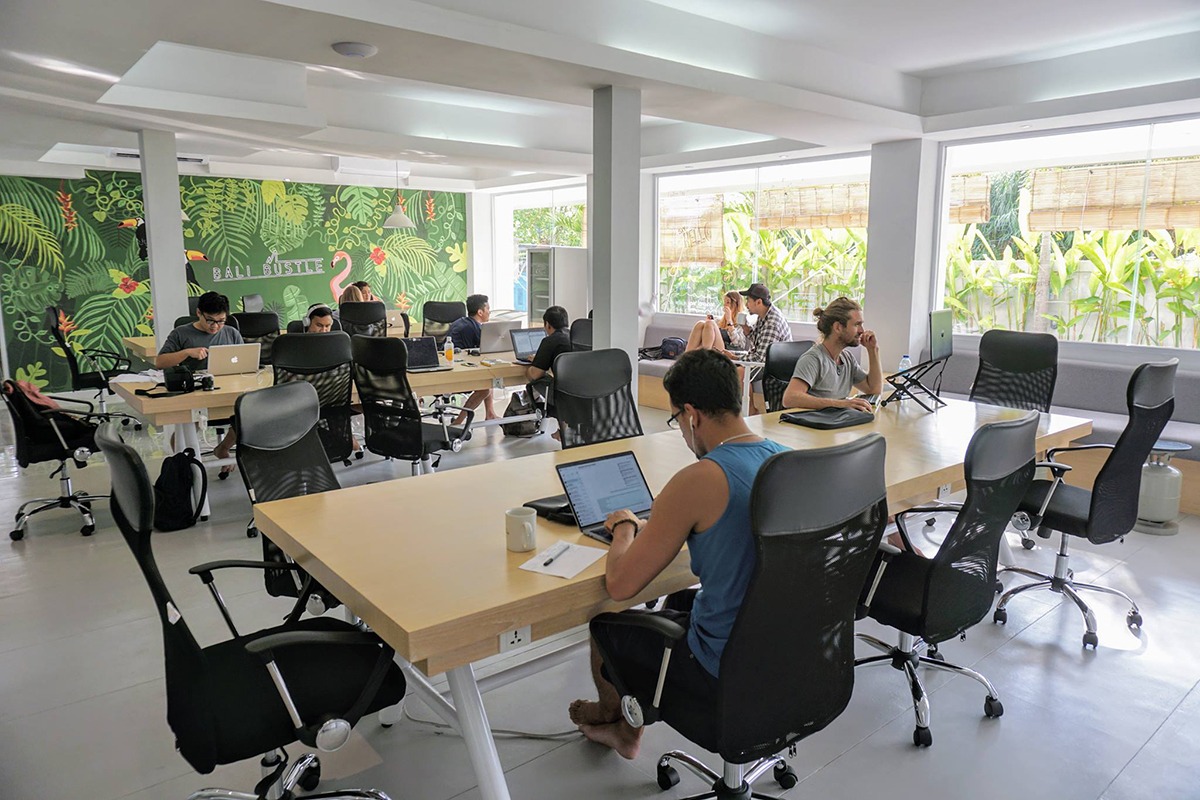
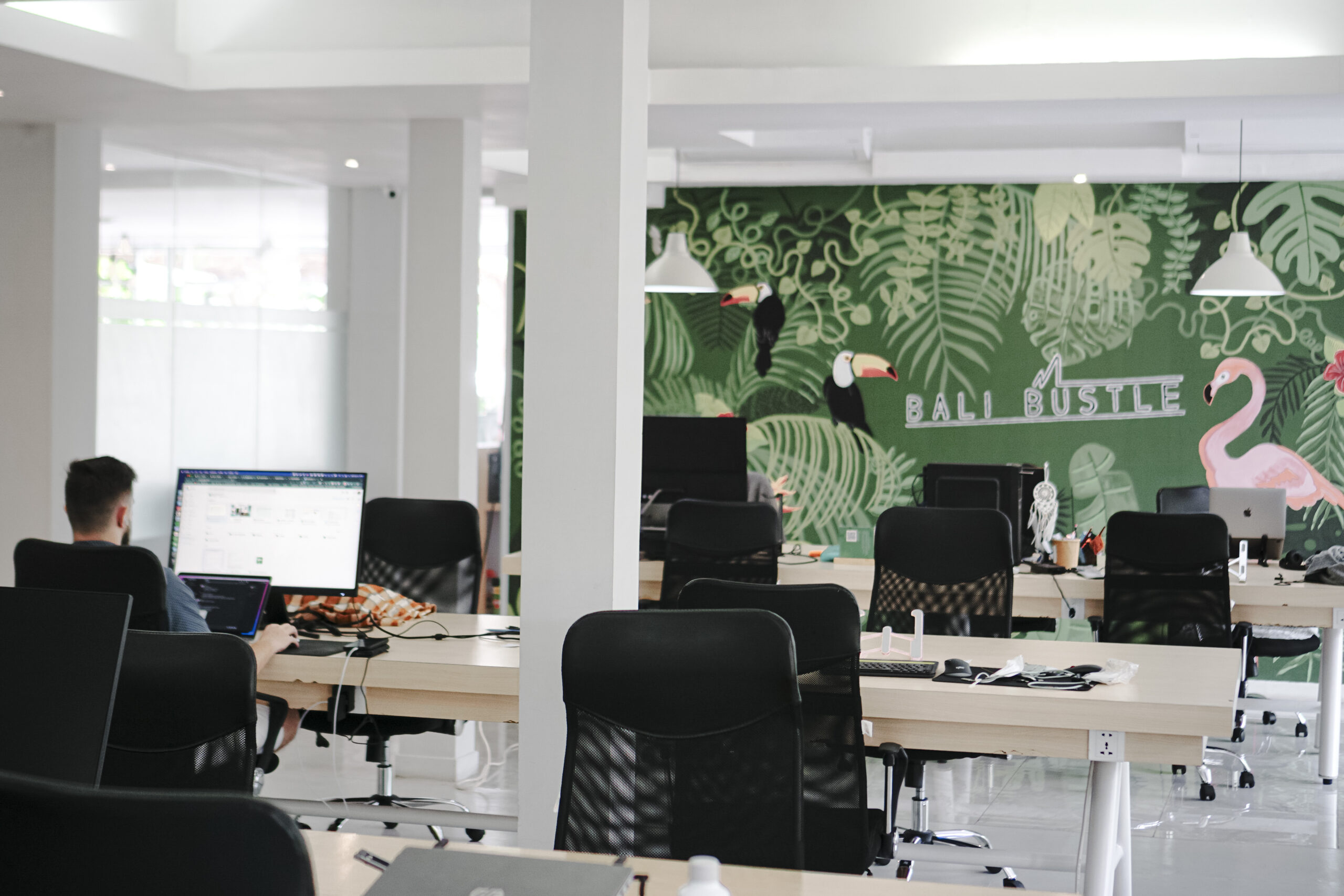
A space like Bali Bustle is an example of this integrated approach, where you can live close to your office, enjoy a stable work environment, and still have access to shared facilities and helpful and responsive staff when you need assistance.
Frequently Asked Questions
Who are coworking spaces in Bali designed for?
They are mainly designed for remote workers, digital nomads, freelancers, and small teams who need a professional place to work with reliable Wi‑Fi and proper facilities.
Is a coworking space in Bali better than working from cafes?
For occasional work, cafés can be fine, but a coworking space usually offers more stable Wi‑Fi, ergonomic seating, meeting rooms, and a more consistent work environment.
Do coworking spaces in Bali offer 24/7 access?
Some spaces do, especially those targeting long‑term members with clients in different time zones. Access hours usually depend on the membership type you choose.
Can I take calls and video meetings there?
Yes. Most spaces provide call booths or quiet rooms, and larger hubs offer bookable meeting rooms with screens and good audio for longer or more formal calls.

Bali Bustle Team shares practical insights about coliving, coworking, and remote work lifestyle in Bali, based on the brand’s experience managing community-driven living and working spaces in Bali.